
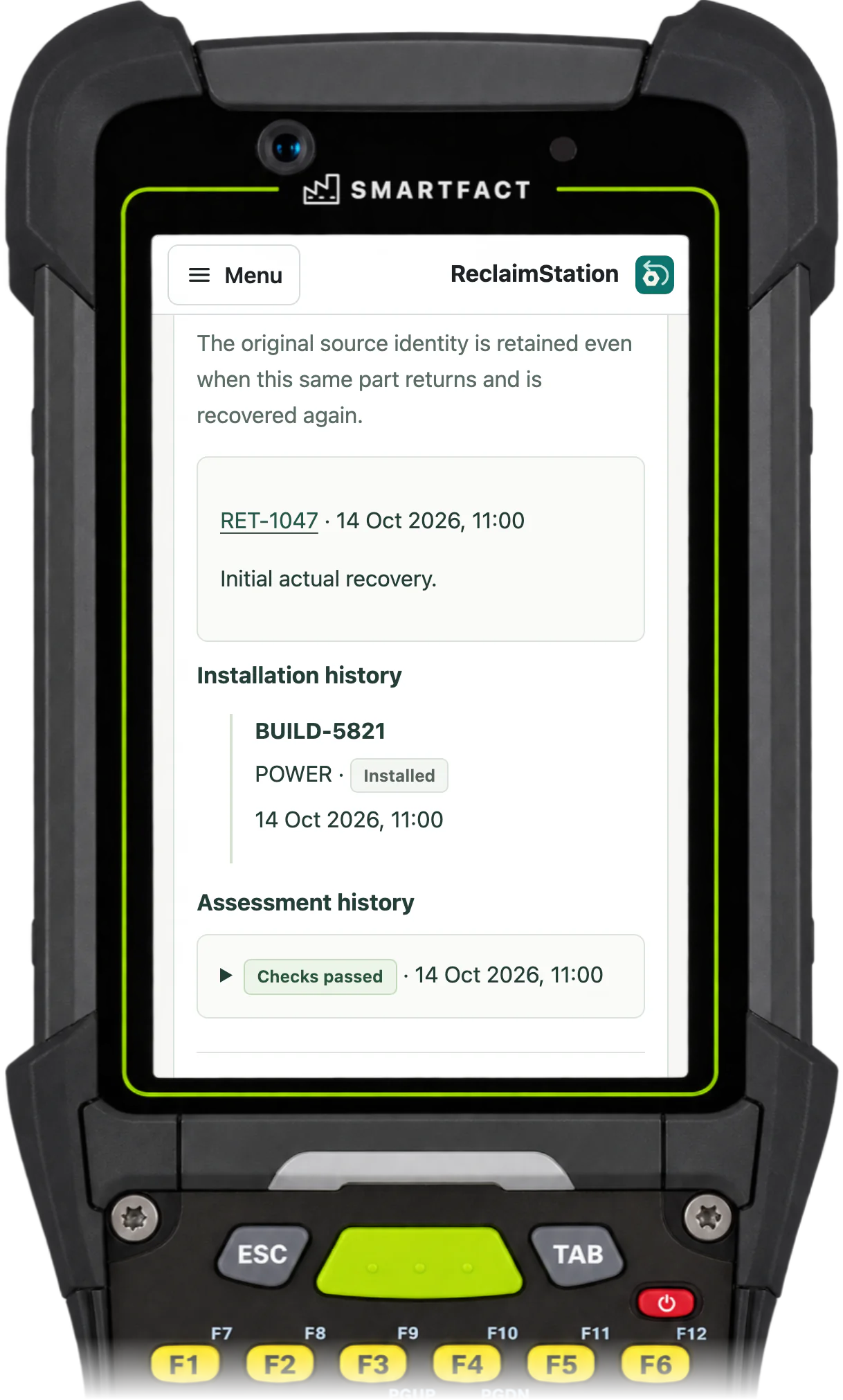
Where did the part come from?
Every recovered part is recorded against the return and the unit it actually came out of, with the approved recovery method, its position in the unit, its part code, revision and manufacturer serial, and the condition seen. A part that was expected but not recovered, such as a cracked cover, is recorded as a finding, not as a part. The part keeps its source unit and return for as long as it is in use, and every recovery visit is listed.
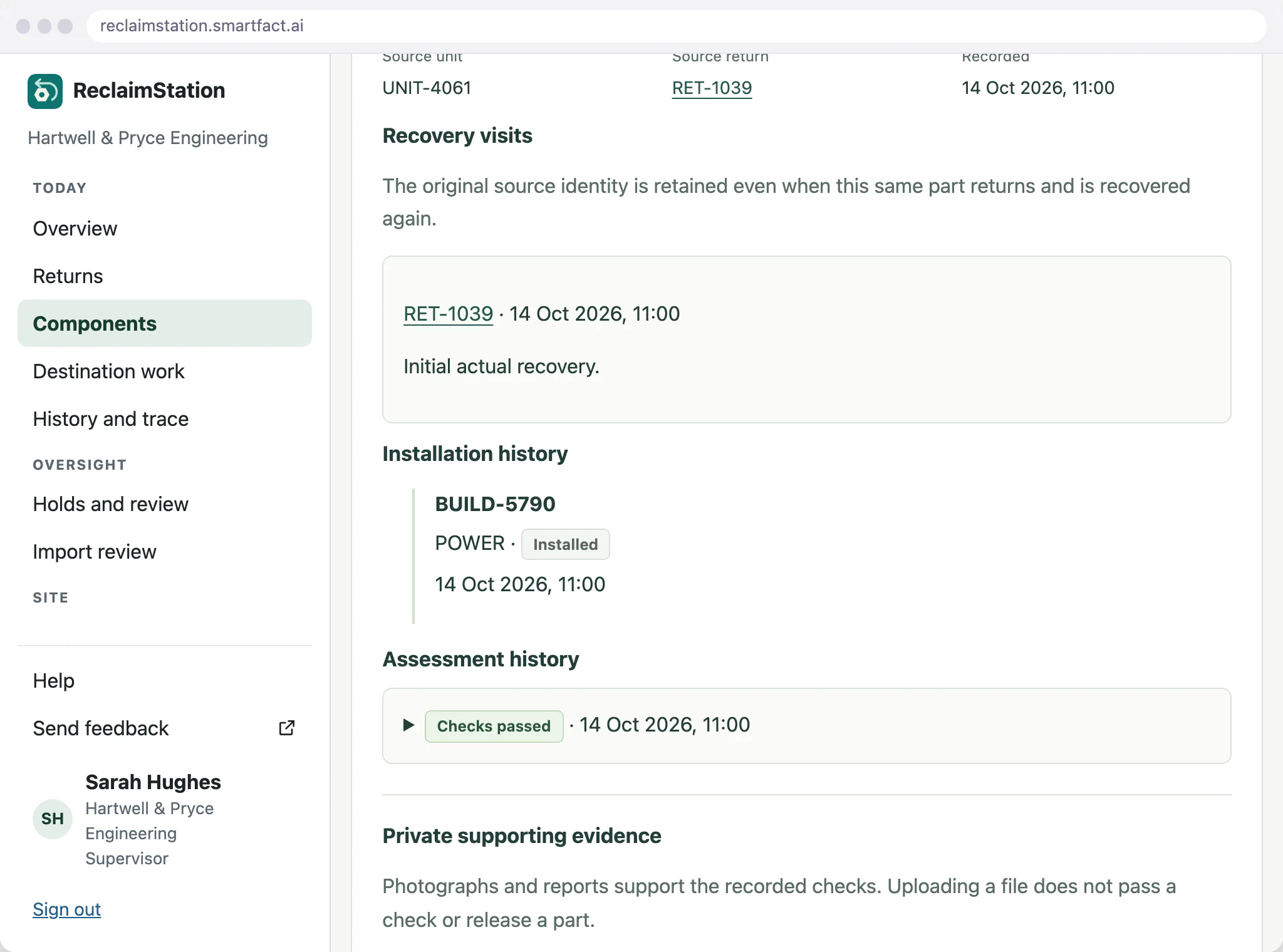
One identity for each part
Each recovered part gets its own identity and QR label, separate from the manufacturer's serial, which is kept exactly as printed. Scanning a label opens that one record. An unknown barcode is refused and creates nothing, so a part without a record can't quietly join the stock.
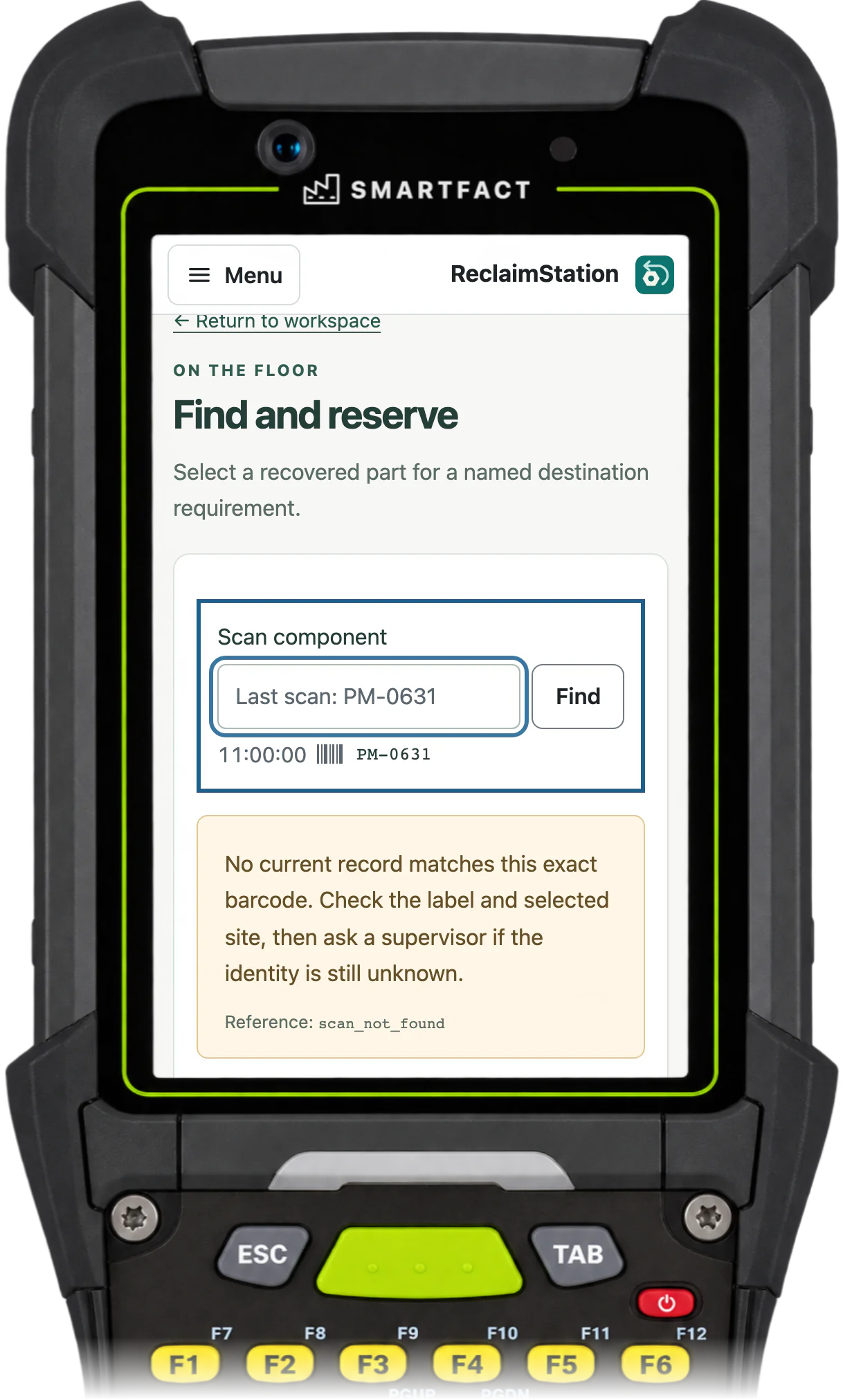
Checked, then released by someone else
Checks are recorded against the approved method, such as a bench output reading, and its limits are applied when the checks are submitted. A recovered part stays held until a supervisor who didn't supply that evidence reviews the observations, the owner's permission and the intended use, and releases it. Grading a part is not releasing it.
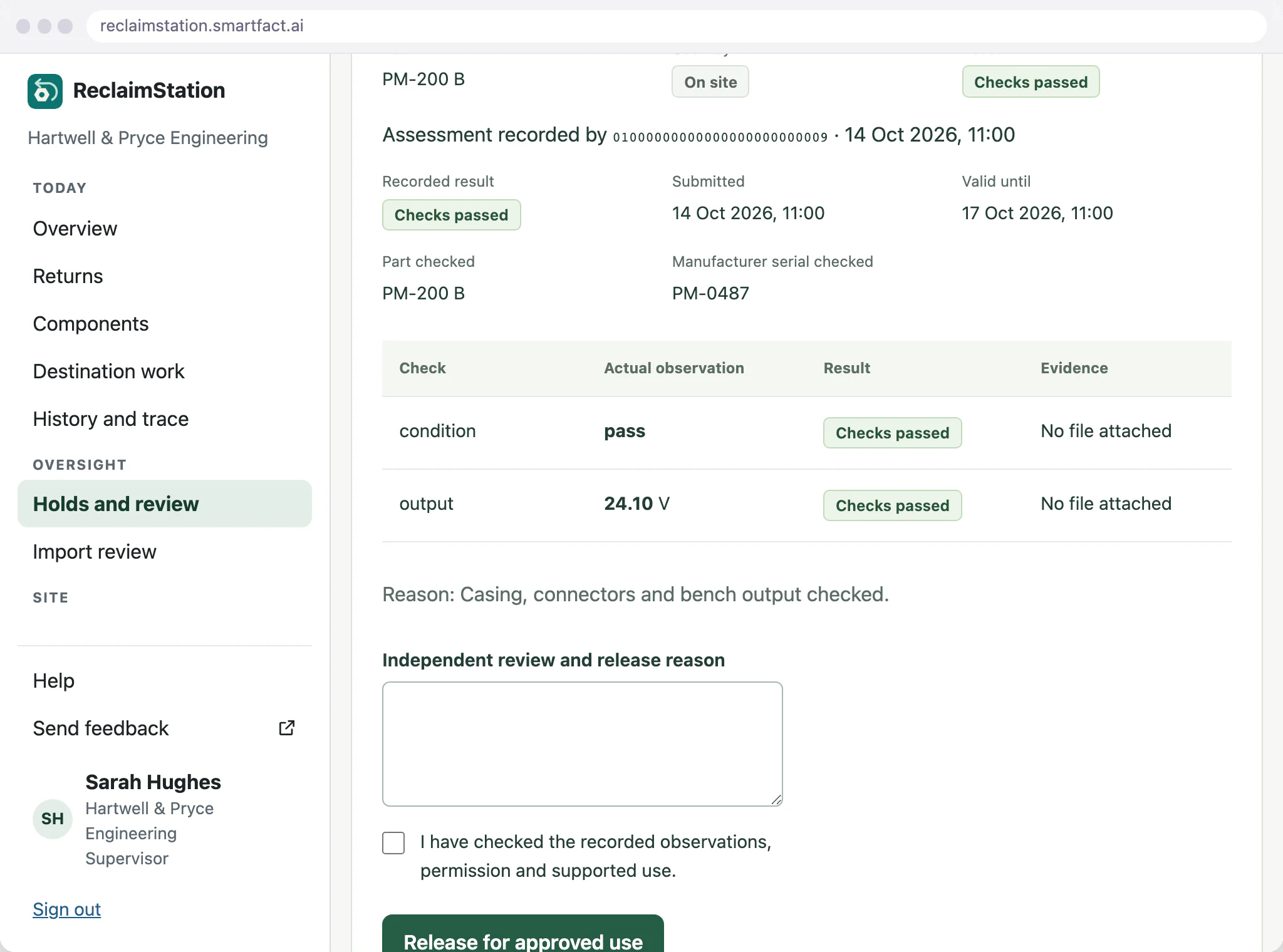
Which unit is it going into?
A released part is reserved for a named unit's requirement, with its slot and required revision. Permission, release, holds and the approved reuse policy are checked again, and two people can't reserve the same part. A reservation is not a fitting: the installation is recorded when the part and the unit are both scanned against the reservation, started and confirmed once the part is physically fitted.
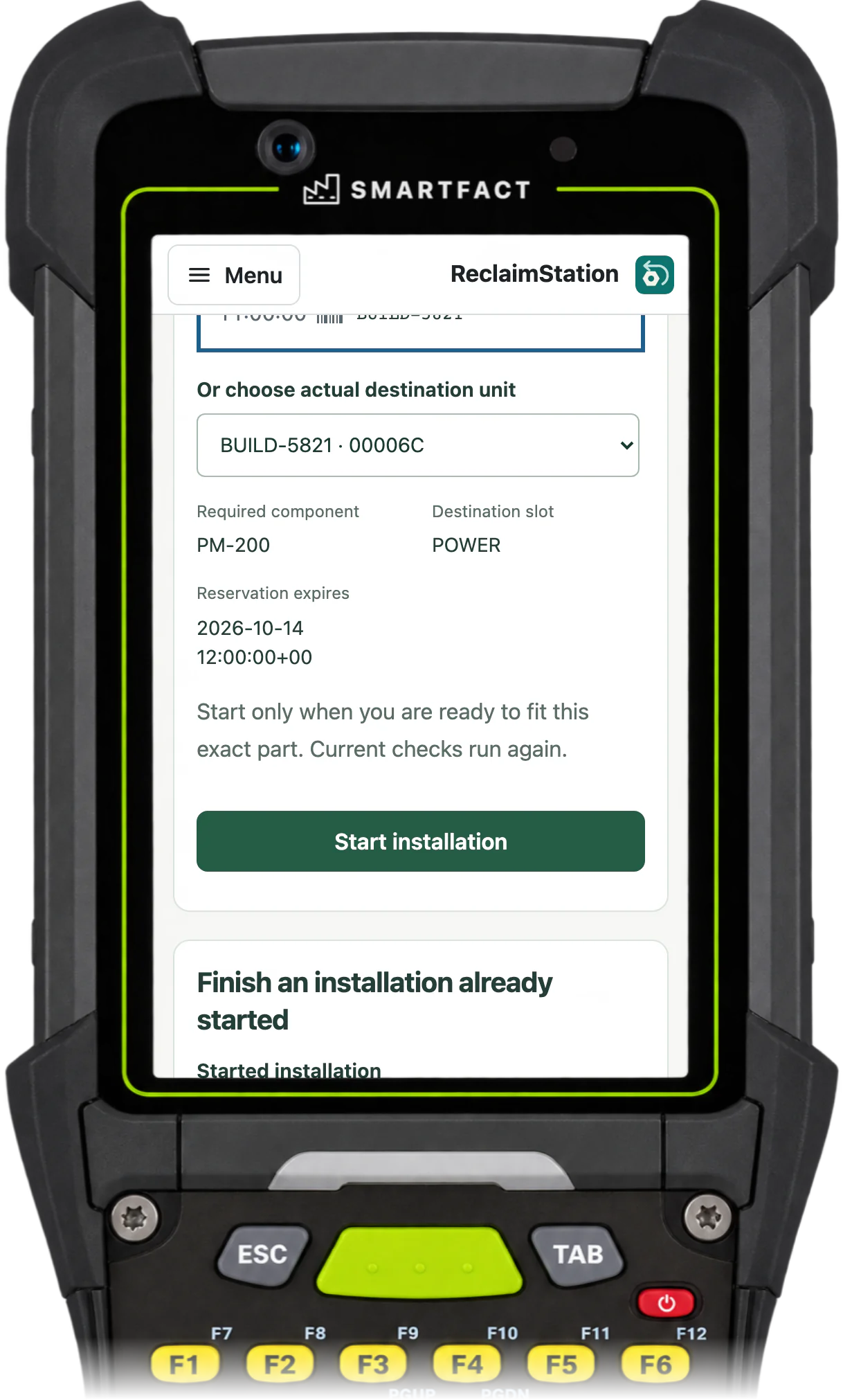
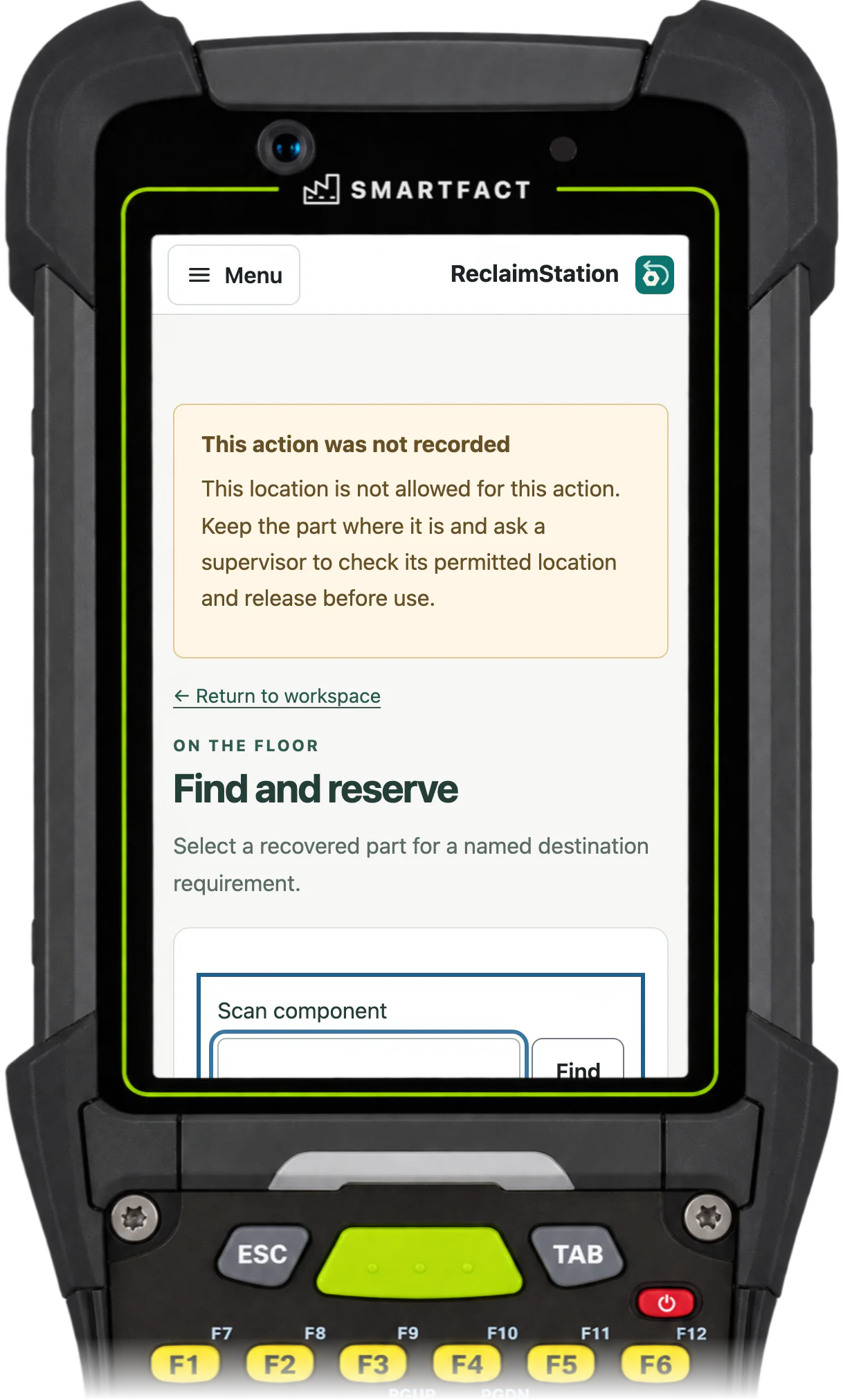
Held parts stay out of use
A part waiting for its checks and release stays out of use wherever it is put. Moving it into a bin doesn't make it available, and a reservation for it is refused with the reason, for a supervisor to review what is missing.
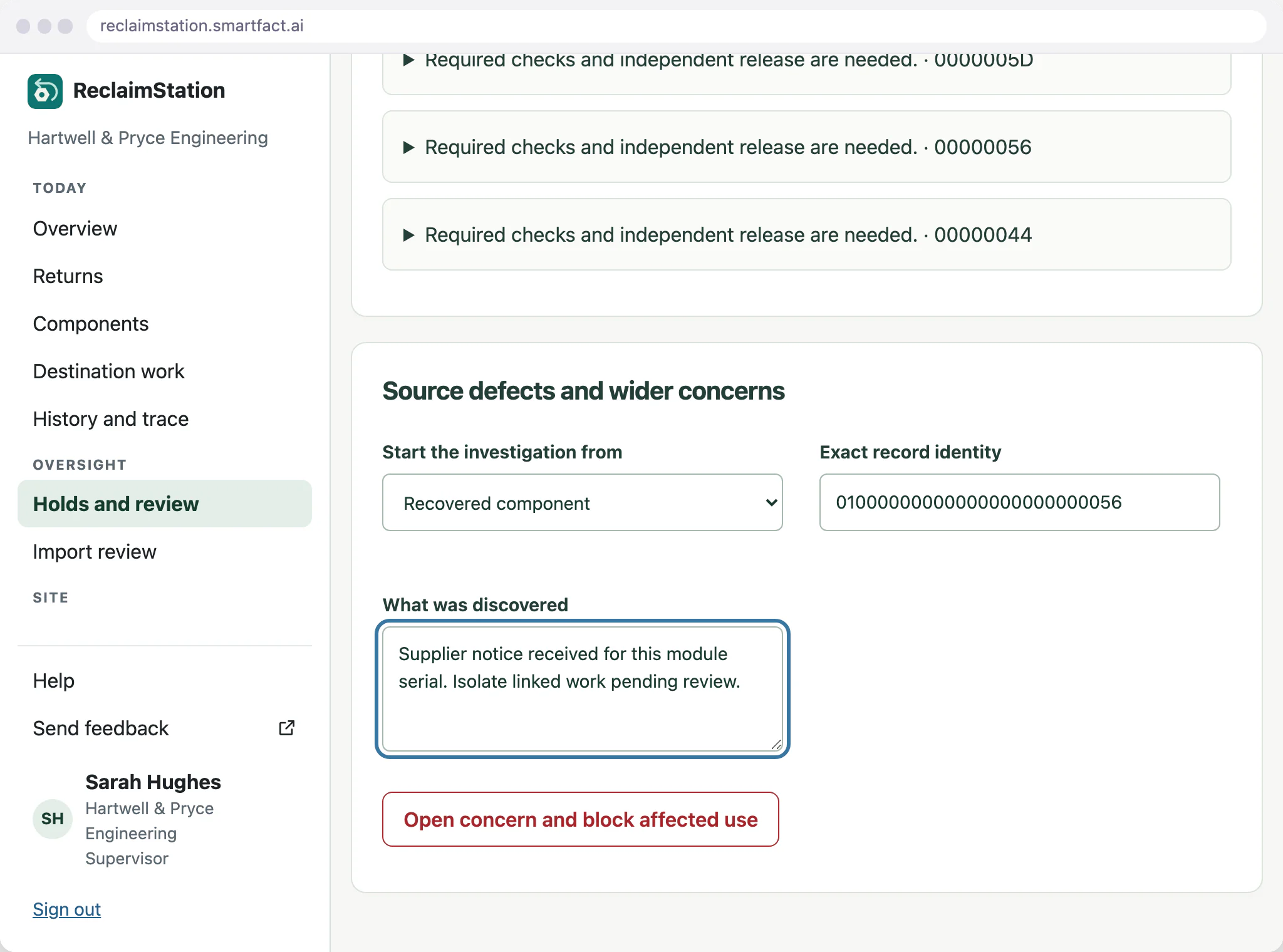
When a source problem turns up
A supplier notice about a serial, or a fault found in a fitted unit, is recorded as a concern against the exact part. It blocks affected use at once and shows the units the part is fitted in, so a supervisor can follow it back to the return and forward to every unit that used it. A concern is a record of what is known, not a completed recall.
What ReclaimStation does not do
- Refurbishing, certifying or warranting a part. Your team does the work and decides its reuse within approved rules.
- A regulatory compliance claim, such as for ISO 13485 or IATF 16949.
- Medical devices, aircraft parts or life-limited components.
- More than one site to start.
Common questions
What does traceability of parts mean?
Being able to say, from records, where a part came from, what was done to it and where it went. For a reused part that means its source return and unit, its checks and release, and each unit it has been fitted into.
What are refurbished parts?
Previously used parts that have been checked, and repaired where needed, before they are used again. ReclaimStation records the checks your team sets and the release a supervisor makes; it does not refurbish, certify or warrant parts itself.
What are the two main types of traceability?
Internal traceability, within one site's own processes, and chain traceability, between suppliers, the manufacturer and customers. ReclaimStation keeps the internal record at one site, from the returned unit to the unit each part goes into.
Trials are by invitation and start with one agreed workflow. Scope and arrangements are agreed with you before access.


